
Hearing Test in Singapore: Types, Cost, and What to Expect During the Process
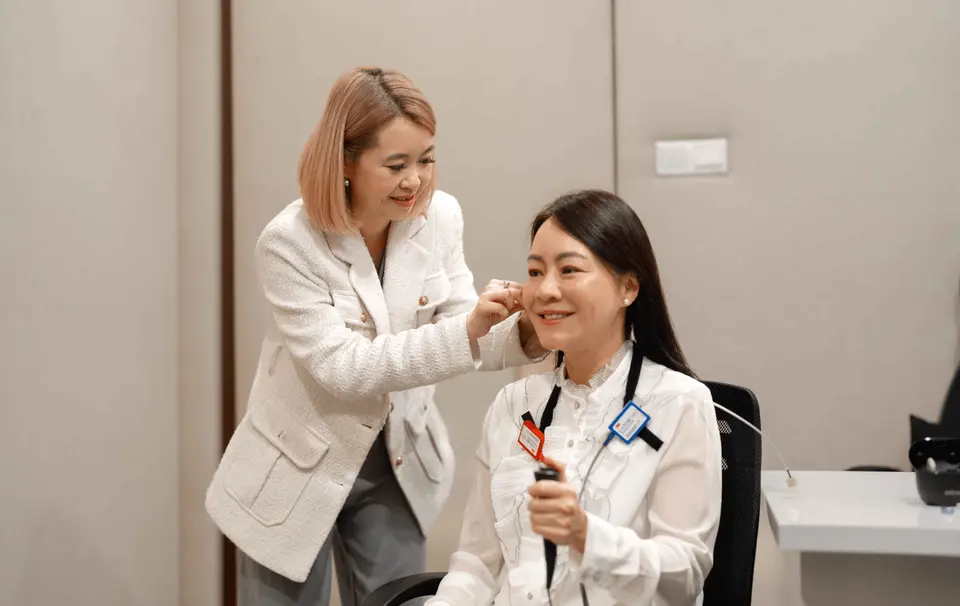
Hearing loss is a common but often overlooked condition that can significantly affect communication, social interaction, and overall quality of life. It tends to become more prevalent with age, affecting around two in three Singaporean adults above 65 years old.1
Hearing tests play an important role in identifying hearing problems and supporting timely intervention. This article explores the types of hearing tests available in Singapore, how to prepare for them, and what to expect during one. It also covers related questions about how hearing tests work and where you can get one done.
What Is a Hearing Test?
A hearing test, also known as an audiometric test, is an audiological assessment used to evaluate how well a person can detect and understand sounds. It measures several aspects of hearing, including hearing thresholds, middle-ear function, and speech understanding.
Most hearing tests are non-invasive, painless, and performed in a clinical setting by a trained audiologist or hearing care professional. Depending on the individual’s age, symptoms, and medical history, different hearing assessments may be recommended.
The results of a hearing test can help determine the type, degree, and possible cause of hearing loss, guiding appropriate treatment or management options to support better hearing and communication.
Do I Need a Hearing Test?
Hearing loss can develop gradually and may not always be immediately noticeable. Many people adapt to changes in their hearing over time, which can delay diagnosis and treatment.
To guard against hearing loss, take a hearing test every one to two years to monitor and pick up any early signs of deterioration. This is highly recommended if you’re past the age of 40 or frequent loud environments. However, if you experience any of the following signs of hearing loss, a hearing test is necessary.
Common Signs in Adults
Adults with hearing loss may experience symptoms that affect communication, work, and daily activities. Common signs include:
- Difficulty following conversations, especially in noisy environments
- Frequently asking others to repeat themselves
- Difficulty hearing on phone calls
- Turning up the TV, phone, or music volume higher than usual
- Ringing or buzzing sounds in the ears (tinnitus)
These symptoms may appear gradually and can sometimes be mistaken for normal ageing or temporary hearing difficulties.
Common Signs in Infants and Children
Hearing difficulties in children can present differently depending on their age and developmental stage. Some children may show obvious signs, while others may experience more subtle communication or behavioural changes.
Signs that a child may have hearing difficulties include:
- Limited or inconsistent response to sounds
- Reduced interest in communication or social interaction
- Difficulty locating where sounds are coming from
- Not responding consistently when their name is called
- Delayed speech or language development
- Watching television or listening to devices at unusually high volumes
- Difficulty paying attention during conversations or in class
- Speaking louder than usual
Take a hearing test today!
If you’ve noticed these symptoms in yourself or a loved one, don’t wait to seek support. Book a hearing test at your nearest hearing clinic to better understand your hearing health and get the care you need.
Types of Hearing Tests Available in Singapore
Hearing tests are usually performed in-clinic to provide a more comprehensive and accurate assessment of your hearing ability. Different assessments may be recommended for adults, children, and infants to ensure accurate evaluation of hearing ability and auditory health.
In-Clinic Audiological Tests for Adults
In-clinic audiological tests are conducted by a hearing care professional using specialised equipment in a quiet, sound-controlled environment. These assessments provide a detailed evaluation of hearing ability and help identify the type and severity of hearing loss.
Tympanometry
Tympanometry is a test used to assess how well the middle ear and eardrum are functioning. Before the procedure begins, the hearing care professional may examine the ear canal using an otoscope to check for blockage or visible abnormalities. A soft probe is then placed into the ear canal to introduce gentle pressure changes and sound tones while measurements are taken.
The results help identify issues affecting the middle ear, such as fluid buildup, ear infections, or Eustachian tube dysfunction. Tympanometry may also detect any small eardrum perforations that may not be obvious during a routine ear examination.
Pure Tone Audiometry
Pure Tone Audiometry (PTA), also known as a hearing sensitivity test, evaluates the quietest sounds a person can hear across different pitches and frequencies. The test is typically carried out in a quiet or soundproof environment using headphones or insert earphones connected to specialised equipment.
During the assessment, tones of varying frequencies and volumes are played one at a time, and the individual indicates whenever a sound is heard. The responses are used to create an audiogram, which helps determine the presence, type, and severity of hearing loss.
Speech Discrimination Test
A speech discrimination test measures how clearly a person can recognise and repeat spoken words. Unlike a standard hearing frequency test that focuses on detecting tones, this assessment evaluates speech understanding in practical listening situations.
Words may be presented at different loudness levels to assess how well speech is understood under varying conditions. Testing can also be performed with and without hearing aids to evaluate hearing aid benefit. In some cases, a Speech In Noise test may be recommended for individuals who struggle to understand conversations in crowded or noisy environments, even if their basic hearing test results appear normal.
In-Clinic Audiological Tests for Children
Hearing plays a key role in children’s speech, language, learning, and social development. Identifying hearing issues early allows parents to seek timely intervention and support for their child.
Children and newborns require age-appropriate hearing assessments to evaluate their auditory development accurately. While hearing tests such as tympanometry and pure tone audiometry (PTA) may be suitable for preschoolers, depending on their attention and development, there are also specialised assessments designed for infants and young children. This includes:
Otoacoustic Emission Test (OAE)
The OAE test is a quick, non-invasive hearing screening used to assess the inner ear, particularly the cochlear hair cell function. During the test, a small probe is placed gently in the ear canal to deliver sounds and measure the ear’s response.
Visual Reinforcement Audiometry (VRA)
For this test, sounds are played either through speakers or earphones, depending on what the child is most comfortable with. The hearing care professional will gently encourage the child to respond to sounds by turning towards them, with positive reinforcement provided through engaging visual rewards such as animated toys or colourful videos.
Conditioned Play Audiometry (CPA)
Conditioned Play Audiometry (CPA) is a behavioural hearing test in which the child is guided to complete simple play-based activities. These activities include a variety of tasks, such as placing objects into a container whenever a sound is heard. This interactive approach helps hearing care professionals assess hearing ability in an engaging, age-appropriate way.
Auditory Brainstem Response Infant Screening (ABRIS)
The ABRIS evaluates how the hearing nerve and lower brainstem respond to sound. Small sensors are placed on the child’s head and ears to record brainwave activity while sounds are played through earphones. This test is best done when the infant is asleep.
Auditory Steady State Response (ASSR) and Auditory Brainstem Response (ABR)
Similar to ABRIS testing, these tests are done when the child is rested or asleep. During this time, sensors are placed to measure the brain’s response to sound stimuli. However, instead of screening, ASSR and ABR are diagnostic assessments that assess the auditory nerve integrity and estimate the hearing levels at different frequencies. These tests are particularly useful for establishing hearing thresholds in infants, children, and even adults who are unable to complete conventional hearing tests.
Online Hearing Tests
Online hearing tests can provide a convenient first step for individuals concerned about their hearing. While online tests cannot replace a professional audiological assessment, they may help identify early signs of hearing difficulties and indicate whether further evaluation is needed.
Our online hearing test consists of two components:
- Self-evaluation questions: Questions about your hearing ability and listening difficulties in daily life.
- Tone test: Sounds at different frequencies will be played to assess whether you can hear them.
After completing the test, you will receive a general evaluation of your hearing health along with recommendations on the next steps, including whether a comprehensive in-clinic hearing assessment is necessary.
How to Prepare for a Hearing Test
Whether you are attending an in-clinic assessment or taking an online hearing test, following the right steps to prepare can help ensure more accurate results. Here’s how to prepare for your upcoming test.
In-Clinic Hearing Tests
For in-clinic hearing tests, you can start by booking an appointment at your preferred hearing clinic. In the days leading up to your appointment, consider the following preparations:
- Seek medical care at a GP or ENT clinic if you have significant earwax buildup or other medical concerns
- Avoid visiting loud places for at least 24 hours before the test
- Ask a family member or caregiver to accompany you for the hearing test
- Bring along previous hearing test records for comparison (if any)
Online Hearing Tests
Online hearing tests should be completed in a quiet environment with little background noise to improve the accuracy of the assessment. To prepare for the online hearing test:
- Use a computer, smartphone, or tablet with stable audio output
- Prepare earphones or headphones before starting the test
- Set your device volume to approximately 50%
- Complete the test in a quiet room without background noise or interruptions
While online hearing tests can provide a useful initial screening, you should still consider a comprehensive in-clinic hearing assessment if you experience persistent hearing difficulties in your daily life. Schedule an appointment with us today.
What To Expect During A Hearing Test
If this is your first time taking a hearing test, understanding what happens can help you feel more prepared and comfortable before your appointment. Here’s what will happen during an in-person hearing test conducted at our hearing clinic.
Consultation With a Hearing Care Professional
During the visit, your hearing care professional will conduct an initial consultation to understand your hearing concerns, medical history, lifestyle, and any symptoms you may be experiencing. A physical ear examination will also be performed to check for earwax buildup, infections, or other abnormalities that may affect hearing.
You should inform your hearing care professional about any recent ear infections, ear pain, tinnitus, dizziness, or other hearing-related symptoms. Sharing details about your medical history and daily hearing difficulties, such as trouble hearing conversations, television audio, or phone calls, can help them better understand your condition.
During the Hearing Test
The hearing assessment is usually conducted in a quiet and soundproof room or booth using specialised audiology equipment. Your hearing care professional will recommend the tests appropriate for your concerns. Instructions will be given throughout the assessment to ensure the tests are completed accurately and comfortably.
Results and Follow-Up
After the test, your hearing care professional will explain your results and discuss any findings related to your hearing health. Based on the assessment, personalised advice will be provided to help manage hearing concerns. This may include:
- Monitoring hearing changes over time
- Recommendations for hearing aids or hearing support devices
- Additional hearing assessments to monitor progress or adjust treatment plans
- Referral to an Ear, Nose, and Throat (ENT) specialist if further medical evaluation is needed
If hearing aids or further intervention are recommended, additional appointments may be required for fitting, adjustment, or ongoing hearing care support.
How Much Does A Hearing Test Cost in Singapore?
The cost of a hearing test in Singapore can vary depending on the clinic, the type of hearing assessment performed, and whether additional specialised evaluations are required. At Hearing Partners, the cost of an in-clinic hearing test ranges from $87.20 to $141.70 (including GST), depending on the type of assessment required.
If you are experiencing hearing difficulties or would like to better understand your hearing health, consider booking a professional hearing assessment with Hearing Partners for personalised evaluation and recommendations.
Take Charge of Your Hearing Health With a Hearing Test
Hearing plays an important role in how we connect with the people and world around us. From conversations with loved ones to staying aware of our surroundings, good hearing supports communication, safety, learning, and overall well-being. However, hearing changes can develop gradually, making them easy to overlook until they begin affecting daily life.
Taking a hearing test is an important step towards understanding your hearing health and identifying potential issues early. Early detection of hearing loss and other auditory conditions allows you to seek timely treatment or hearing support before symptoms worsen. Better hearing can help reduce misunderstandings in conversations, improve concentration at work or school, and support more confident participation in social, family, and community activities.
Whether you have noticed changes in your hearing or simply want peace of mind, a professional hearing test can provide valuable insight into your hearing health and help you make informed decisions about the next steps forward. Book an appointment at any of our nearest hearing clinics today.
FAQs About Hearing Tests
Hearing tests in Singapore can be performed at audiology clinics, hospitals, ENT clinics, and specialised hearing care centres. Hearing Partners offers hearing assessments at multiple clinic locations across Singapore for both adults and children.
If you are keen to take a hearing test, book an appointment at your preferred clinic location for a professional hearing assessment and personalised hearing care recommendations.
1Retrieved from PubMed

Eliza pursued a career in Audiology with the goal of making a meaningful difference in people’s daily lives by helping them hear, connect, and regain confidence. Witnessing how improved hearing can transform communication, relationships, and overall quality of life continues to inspire her.
Eliza Salcedo
Senior Clinical Audiologist
Schedule a Free Hearing Test
Required fields are marked.
*Hearing Partners does not offer ear wax removal services.