
A Guide to Tympanometry: Purpose, How it Works and Types of Tympanogram Readings
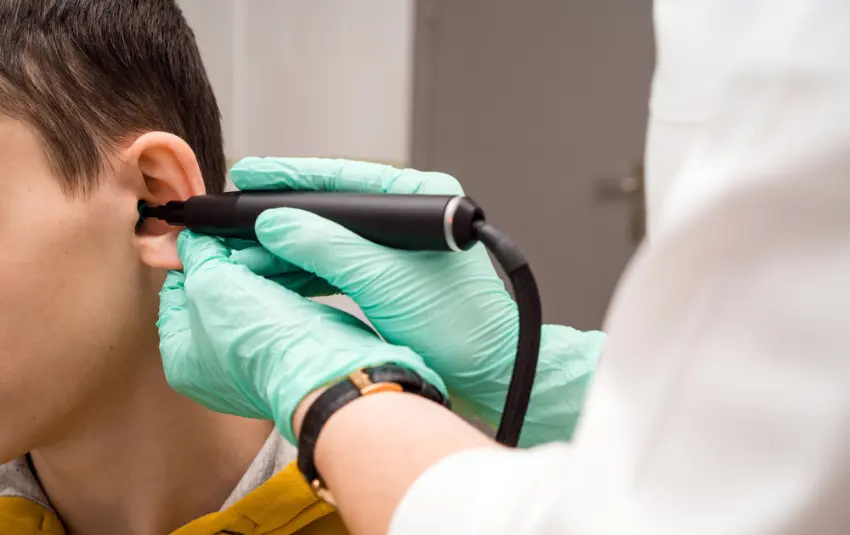
Tympanometry is an assessment that measures the middle ear function. It evaluates how the eardrum responds to changes in air pressure within the ear canal. A tympanogram is a graphical representation of the results of this examination. The test and the interpretation of the results will be carried out by a trained audiologist.
In this article, we’ll share the purpose of tympanometry, how it works and the various types of tympanogram readings. We’ll also cover some of the frequently asked questions about this assessment.
Purpose of Tympanometry
A tympanometry test can be helpful in highlighting problems with the middle ear and disorders that may potentially result in hearing loss. Some common issues identified through this test include:
- Otitis media with effusion (OME), otherwise known as a middle ear infection
- Abnormal ear pressure
- Perforated ear drum
- Eustachian tube dysfunction, causing an inability to equalise middle ear pressures
How Does Tympanometry Work?
Before the test
Before starting the test, the audiologist or hearing care professional may use an otoscope to look inside your ear canal. This is done to ensure that your ear canal is clear of earwax or any foreign objects.
During the test
A probe, which is attached to a tympanometer, will be placed into your ear canal and positive and negative air pressure will be applied to the middle ear. This is accompanied by a constant low-pitched tone. For infants, a high-pitched tone will be used.
The test records the amount of sound that is absorbed or reflected by the middle ear as the pressure changes. The results will be represented graphically in a tympanogram.
Think that you might have hearing loss?
If you suspect that there are problems with your middle ear that are causing you to experience hearing loss, book an appointment to get your ear checked by our audiologists.
Types of Tympanogram Readings
The x-axis of a tympanogram measures the air pressure in the ear (daPa) while the y-axis represents the compliance (ml), which is the ability of sound to pass through the eardrum to the middle ear. The graph also provides information about the ear canal volume (cm3).
Note: Different hearing care clinics and audiologists may classify the readings differently. This section serves to provide general information and you’re advised to consult your audiologist regarding your test results for an accurate diagnosis.
Normal readings
Normal readings, i.e. Type A tympanogram, can be identified by a mountain-shaped graph that peaks around the 0 daPa mark. The pressure inside the middle ear usually ranges from -100 to +100 daPa.
These readings indicate that:
- The eardrums and ossicles (small bones found in the middle ear) move normally in response to the stimuli
- Pressure in the middle ear is normal
- There’s no fluid in the middle ear
Other tympanogram readings
Other tympanogram readings include Type AS, Type AD, Type B and Type C.
Type AS (shallow)
Type AS tympanograms have a lower maximum height than that of Type A curves, indicating low compliance and a stiff middle ear system. It requires further investigation to determine if there is a middle ear condition.
Possible middle ear conditions that can cause a shallow tympanogram include myringosclerosis (scarring of the eardrum) and otosclerosis (hardening of the middle ear bones).
Type AD (deep)
Type AD tympanograms have a high maximum height, indicating high compliance and a hypermobile eardrum. Similar to Type AS, further investigation is required to rule out middle ear conditions such as ossicular chain discontinuity.
Type B
Type B tympanograms feature a flat line with a normal ear canal volume. Common causes of such tympanograms include OME and cholesteatoma (tumour in the middle ear).
A hole or tear in the eardrum can also cause a flat graph. However, in cases like this, the ear canal volume exceeds the normal range.
Type C
Type C tympanograms have mountain-shaped curves that are skewed towards the left of the graph. This indicates a highly negative middle ear pressure, which often results in a retracted eardrum.
Common causes include upper respiratory illnesses, a developing or recovering ear infection or Eustachian tube dysfunction.
FAQs About Tympanometry and Tympanograms
Tympanometry assesses the integrity of the eardrum and the function of the middle ear whereas audiometry measures your hearing sensitivity across sound frequencies.
Tympanometry is often conducted to complement and check the consistency of the audiometric results when a conductive hearing loss is detected.

In her years of clinical practice, Jennifer has always adopted a patient-centric approach — empathising with patients’ problems, setting realistic expectations and delivering effective management tips.
As the Team Lead, Jennifer oversees the professional development and ensures good service quality in the team.
Jennifer Lee
Senior Clinical Audiologist
Schedule a Free Hearing Test
Required fields are marked.
*Hearing Partners does not offer ear wax removal services.